Alleyway Kitchen
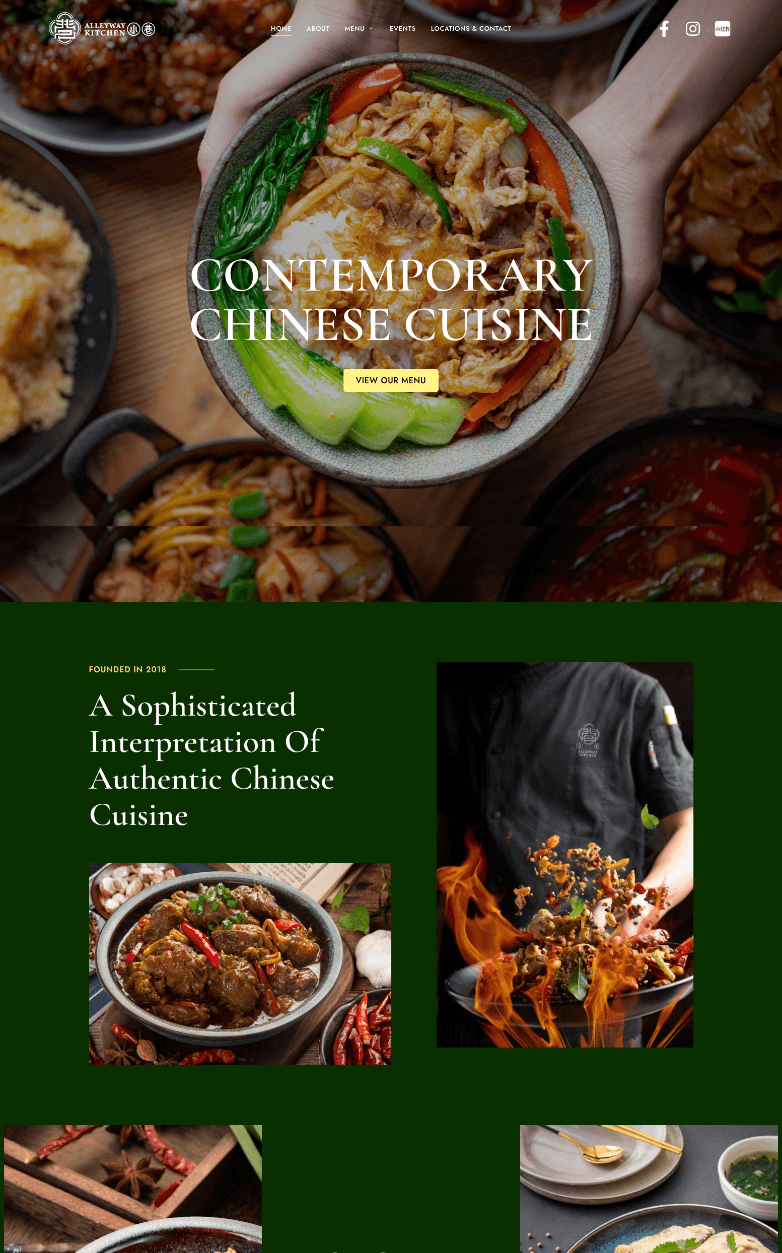
Founded in 2018, Alleyway Kitchen is a Melbourne-based restaurant chain with multiple branches in Sydney and Brisbane. Alleyway Kitchen built a central kitchen. They use supply chain management to further improve the training process and collaboration system to provide unique, authentic and high-quality food for the majority of diners, making the dishes perfect.
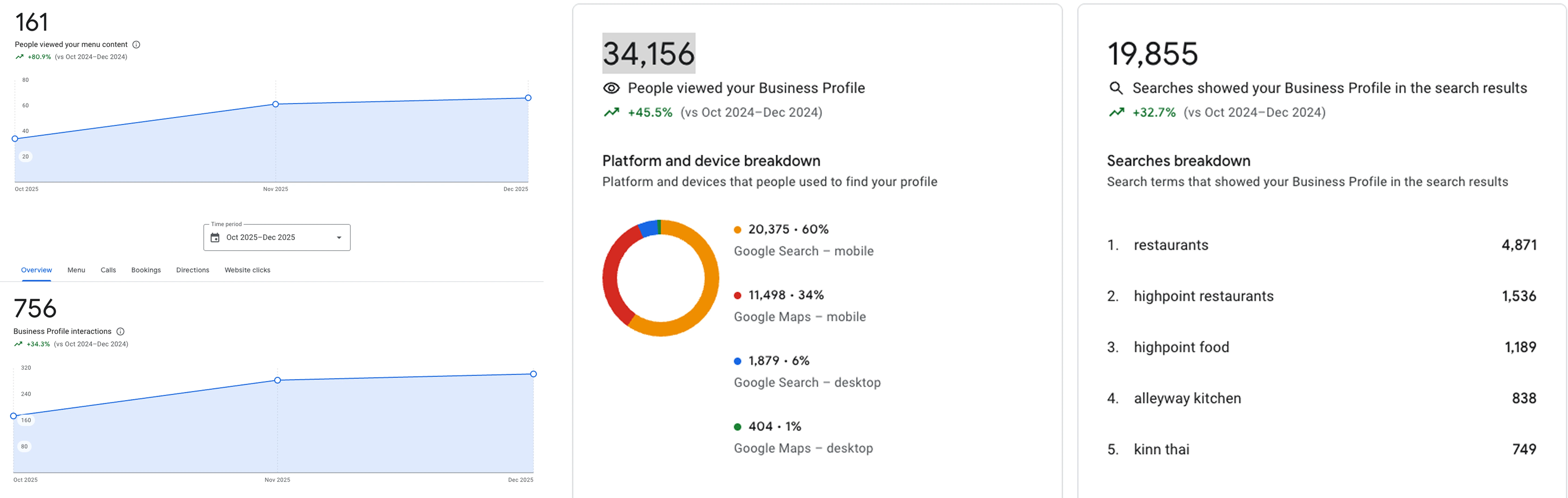
+ 34.3%
Map Interactions
+ 45.4%
Viewed number
+ 32.7%
Search Volume
+ 81%
Menu Views
Data from October 2025 to December 2025
The Problem
Alleyway Kitchen’s outlets sit inside busy shopping centres and high-street strips. The problem with those locations is that similar restaurants cluster together — a customer walking into a centre has dozens of choices, acquisition depends almost entirely on passing foot traffic, and rivals can only compete on position and discounts. The client had already run several rounds of offline promotions, with limited impact on either sales or margin.
The more critical gap was online. Today the first step in deciding what to eat is usually a search: "Chinese food near me", "lunch in Melbourne CBD", or a direct look on Google Maps. Alleyway Kitchen’s food and service were strong, but at this decision point the brand was effectively invisible — prospective diners had already chosen somewhere else before they ever saw the restaurant. That absence showed up directly as unstable foot traffic and constrained revenue growth.
What the client needed was not another promotion, but a reliable online entry point that could consistently bring local customers through the door.

Our Solution
For the classic local hospitality problem — the customers are nearby but they cannot find you — we made Google Maps optimisation (Google Business Profile) the point of attack. The goal was not brand awareness in the abstract, but routing people who are searching right now, within the same precinct, directly into the restaurant.
Completing and Maintaining the Map Listings
When we took over, the client’s listings were riddled with gaps and errors: name, address, phone, website and opening hours were all incomplete. These fields serve two audiences at once — they are how the algorithm judges whether a business is credible, and how customers decide whether to visit. Missing information suppresses ranking and intent simultaneously. We corrected and completed every core field first, then established a routine of publishing high-quality photography of the venue and dishes. Listings that are complete and visually professional rank higher and earn more clicks in local results.
Building a Review Operation
Review volume and response rate are direct ranking factors in local search, and they are also what diners look at most closely when choosing where to eat. We designed a post-visit review prompt for the client and took over responses ourselves — thanking positive reviews, handling negative ones properly, and ensuring every reply was timely and substantive. Once this was running, the review section went from silent to continuously active, which lifted the algorithmic signals and let new customers see genuine word of mouth that was clearly being taken seriously.
Closing the Last Step from Map to Door
The conversion endpoint for local hospitality is a customer physically walking in. The client’s existing map pin and directional details were not precise enough, and outlets inside shopping centres are particularly easy to miss. We corrected the geographic coordinates and in-centre directions so that customers tapping "Directions" were taken accurately to the entrance, plugging the leak between "found you" and "arrived".
Covering Local Search Intent
A newly built map listing has almost no organic visibility. We analysed the actual search behaviour in each outlet’s precinct and identified the language customers really use — cuisine types, occasions, landmarks, surrounding suburb names — then mapped those into the business categories, description and service tags so the listing aligned with local search intent. This step determines whether customers see the restaurant in results at all; every subsequent metric depends on it.
The Result
Between October and December 2025, every Google Maps metric moved up: searches rose 32.7%, views rose 45.4%, map user interactions rose 34.3%, and menu views rose 81%.
The value here lies less in any single figure than in the relationship between them. Searches up 32.7% shows the listing was actively found by more people — the keyword coverage did its job. Views up 45.4%, outpacing searches, shows the share of people opening the listing from results also improved — the work on complete information and professional photography paying off.
The most telling number is the 81% growth in menu views, close to double the growth in overall views. Opening the menu is the action closest to actually eating there — someone idly scrolling past does not tap through to a menu. That rising ratio means the growth was not merely "more people saw it" but "the people who saw it were more serious" — the listing was reaching diners genuinely looking for somewhere to eat, not generic browsing traffic.
For a business whose outlets sit in dense precincts and which previously depended entirely on passing trade, Google Maps went from a listing filled in once and forgotten to a steady, reliable source of local customers.
Related Projects
Check out other similar projects




Get a Free Quote
Let's talk about your goals
Melbourne
Scan the QR code to add our WeChat customer service for faster professional consultation.