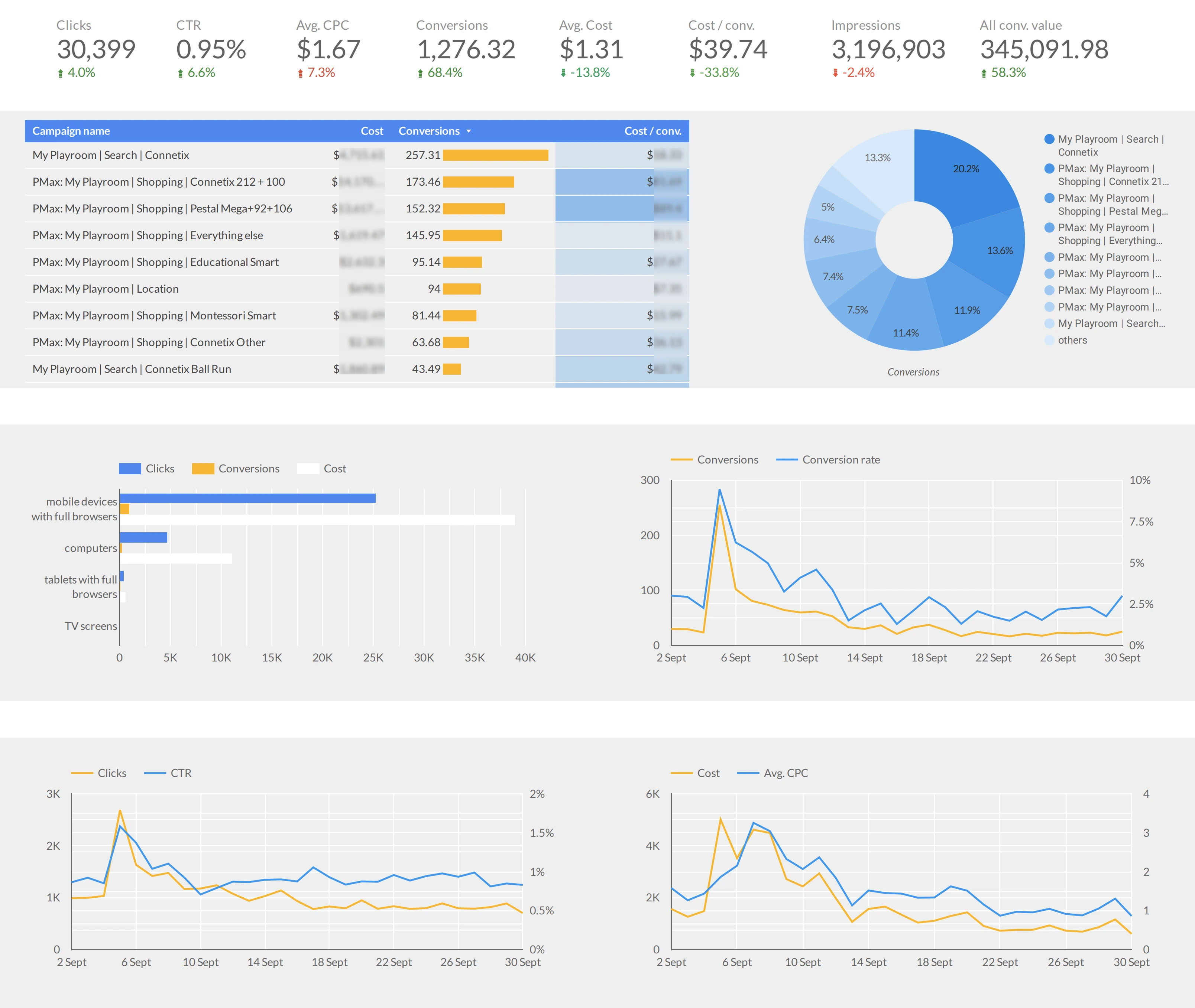
A fixed budget means growth can only come from efficiency. Rather than expanding spend, our approach worked through audience, creative, landing page and timing in turn to raise the value of every click, then locked those gains in with a data process.
Rebuilding the Target Audience and Keyword Structure
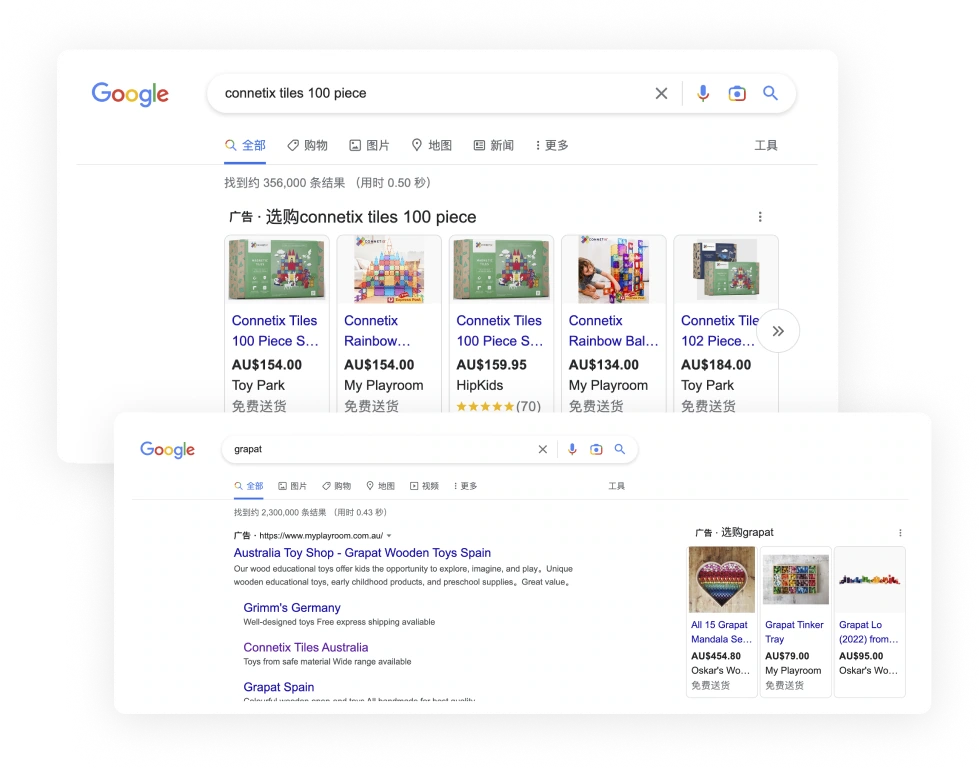
We began by dissecting the main competitor’s strategy — which terms they were buying, what angle their messaging took, and where they were sending traffic — to identify both the overlooked opportunity terms and the over-contested ones.
On that basis, we redrew the target audience profile using demographic and geographic data: the decision-makers buying educational toys are parents and grandparents, focused on age-appropriateness, material safety, educational value and storage. We restructured keywords accordingly, shifting budget away from broad toy category terms toward high-intent long-tail terms such as "open-ended toys", "Montessori materials" and "child-sized furniture", cutting wasted impressions at the source.
Rewriting Ad Copy to Lift Relevance and Quality Score
Ad relevance affects more than click-through rate — it directly determines quality score, and higher relevance means the same ranking costs less. We wrote copy individually for each keyword group, ensuring strict correspondence between search term, ad headline and landing page, and front-loading the factors parents care about most: suitable age range, safe materials, and Australian local dispatch.
We also deployed the full range of ad extensions to expand the ad’s footprint: sitelinks leading directly to category pages, structured snippets listing product lines, and callouts covering delivery and promotions. With ads occupying more of the results page, both click-through rate and quality score improved together.
Aligning Landing Pages with Ad Intent
What happens after the click determines conversion. We rebuilt the ad landing pages: compressing load time so information appeared within three seconds, with particular attention to mobile — the overwhelming majority of parents browse toy sites on a phone.
Structurally we subtracted rather than added, placing product detail, price, purchase button and current promotions above the fold and removing anything unrelated to the specific ad, so users were not left hesitating among too many options. Each ad displayed the core selling points of its corresponding product line, creating an unbroken path from what was searched, to the ad seen, to the page landed on.
Seasonal Campaigns Built Around the Australian Retail Calendar
Toy retail demand concentrates heavily in specific periods. We built phased campaign plans around the key moments in the Australian market — Christmas, Children’s Day and school holidays — entering a build-up phase early to accumulate audiences, concentrating budget at peak demand, and pivoting to clearance and repeat-purchase messaging afterwards.
Copy and visuals were adjusted for each phase, incorporating seasonal elements and reinforced with limited-time discounts and gift-with-purchase mechanics. Using real-time data from Google Analytics and the ads platform, we adjusted bids and budget allocation dynamically within each peak, concentrating a limited budget in the windows where conversion efficiency was highest.
Driving Optimisation Through a Data Process
We established a complete tracking and review framework: real-time performance monitoring, regular audits of operating parameters, and continuous A/B testing across copy, keywords and bidding strategies. Strong combinations received more investment; weak ones were diagnosed and either optimised or paused, so budget was never left draining into traffic that would not convert.
Every adjustment was made on evidence rather than instinct. That discipline ensured optimisation was not a one-time project activity but a process that compounded over time.